
As we mark ten years of Tribe, we’ve been reflecting on what the journey has taught us — about impact investing, about business, and about creating lasting value for all our stakeholders.
These ten learnings come from across our team, shaped by the different roles, experiences and moments that have defined the past decade. Together, they capture some of what has shaped us — and what we’ll carry forward into our NextTen.
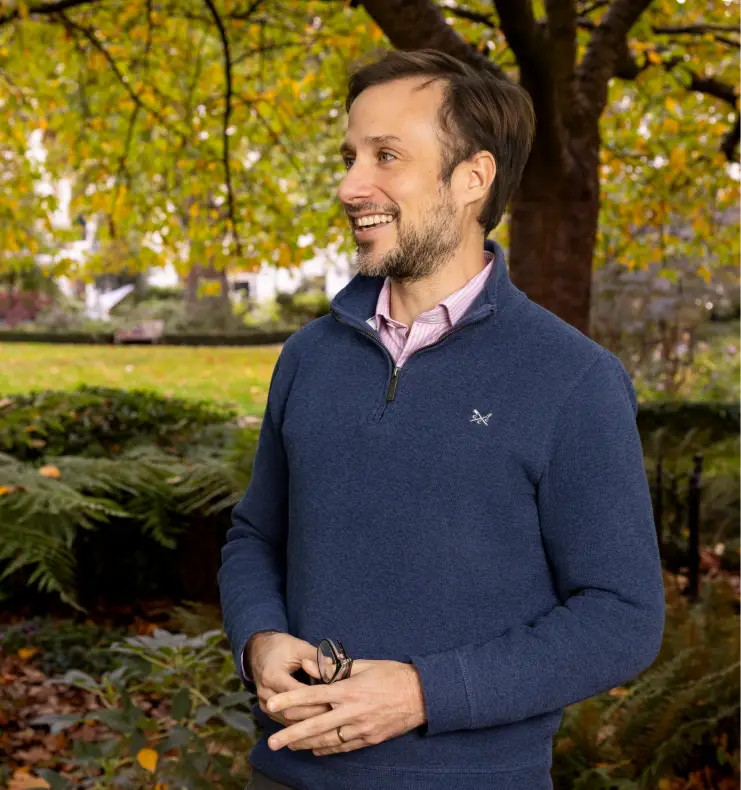
How you do things is as important as what you do.
Henry Bacon – Head of Business Management
I’ve always been fascinated by the inner workings of organisations — the less visible systems, behaviours and decisions that ultimately determine whether a business succeeds or fails.
My first role after university was providing financing to family run businesses in Spain. I spent time on factory floors, visiting facilities, listening to employees, and seeing operations up close. Those experiences often told me far more about the health of a business than its financial statements alone. Time and again, I saw companies with strong products struggle or fail because of disengaged workforces, weak governance, or unsustainable practices. Conversely, businesses with modest offerings but strong cultures and clear accountability proved far more resilient.
Years later, I encountered the B Corp movement, which felt like a more structured and rigorous expression of the instincts I had developed earlier in my career. For the past decade, I’ve worked within B Corps that genuinely try to consider the interests of all stakeholders in their day-to-day decisions — not as an add-on, but as part of how the business operates.
One of the most important lessons from that experience is that impact is never finished. Embedding good intentions into systems, incentives and governance is what makes them endure, but it also requires constant scrutiny and improvement. The work doesn’t stop once the framework is in place — it’s the ongoing discipline of asking whether the way we operate still matches the outcomes we want to achieve.

Simplicity drives progress.
Maddie – Stewardship Analyst
Impact investing is inherently complex. Environmental and social challenges are interconnected, data can be incomplete, and there are often multiple valid ways to approach the same problem.
Over the short time I have been working in impact investing, one thing has become clear: if we let that complexity dictate our approach, it can easily become a barrier to action.
When you’re passionate about making positive change, it’s so tempting to try and address everything at once, to capture every nuance and reflect every interdependency. But in practice, focusing on everything all at once can stall progress. Companies may struggle to respond to overly broad or highly technical demands, and conversations risk becoming circular rather than constructive.
The most effective engagements I’ve seen have been clear and focused. A well-defined, achievable ask gives companies something tangible to work towards; or, in some cases, push back on – and it’s in these moment that we learn the most. A clear, actionable ask creates momentum, builds trust, and opens the door to deeper conversations and more opportunities for other types of impact over time.
This doesn’t mean oversimplifying the issues or lowering ambition. Rather, it is about translating complexity into clear priorities, deciding what matters most, where influence is strongest, and what will unlock further change. There is also an advantage in accepting that “good” can be a meaningful step forward, and we don’t have to wait for ‘perfect’, whether that be perfect data, perfect opportunities, or the perfect ask. In a field where urgency matters, waiting is a risk we cannot afford.
Over time, I’ve come to believe that simplicity is not a compromise — it is a necessity to cut through the noise and create meaningful impact. And in impact investing, it is sustained progress, not perfection, that ultimately delivers the outcomes we seek.

We're still only in the foothills of what impact investing can be.
Rhodri – Chief Executive Officer
I’ve been fortunate to work in ESG, sustainability and impact investing since 2012, when I joined a pioneering firm launching its first ESG portfolios.
Over that time, I’ve seen the market evolve from a niche idea, through a period of rapid growth, to where we are today — a more measured environment, but one with far greater clarity around what impact investing can genuinely deliver for investors.
What stands out is how much further there is to run. Impact investing still represents less than 1% of global AUM, yet is growing at over 20% per year. At the same time, investor intent is clear: in the UK, around 72% of adults with investments say they want their money to “do some good” as well as generate returns, but only ~18% have actually invested in sustainable products.
Closing this gap – between strong underlying demand and access to high-quality, credible solutions – is one of the defining opportunities in wealth and asset management for the next decade.
At Tribe, we’re excited to support investors in allocating their capital to strategies that aim to deliver both meaningful impact and strong long-term outcomes.

Measuring impact can’t be reduced to metrics alone.
Veronica – Impact Associate
Working in impact investing today means having access to more data than ever before. We have ratings, frameworks, labels, key performance indicators (KPIs) and increasingly sophisticated ways of assessing impact.
That’s a huge step forward. Better data helps us make better decisions and brings greater rigour to the overall impact investment process.
One of the things I’ve learned, however, is that the numbers are often just the beginning. A big part of my role is looking beyond the headline metrics and asking what sits behind them. What’s actually being measured? What assumptions have been made? What’s missing? Even the best datasets and data providers can’t always capture the full picture. Over time, I’ve come to see that our job isn’t simply to gather information, but to understand its strengths, limitations and what it really tells us.
A healthcare company, for example, may score highly against a Sustainable Development Goals (SDG) framework. But that score alone doesn’t tell us whether the treatment is affordable, or whether they’re reaching the communities who need them most.
Similarly, a renewable-energy project may report substantial avoided emissions, but that figure doesn’t capture whether local communities were displaced, whether indigenous land rights were respected, or who ultimately benefits from the energy produced or even the development of the project.
The reality is, impact is rarely black and white. Some companies score highly against established frameworks, yet a deeper assessment can reveal important nuances or trade-offs. Equally, businesses creating genuine positive outcomes don’t always fit neatly into a predefined category or scorecard. The challenge for us isn’t finding data; it’s interpreting it with the right level of context and curiosity.
Data should inform our judgement, not replace it. Strong evidence will always be essential, and I’m excited to see the ways reporting and frameworks will continue to evolve over the next decade, but some of the most valuable insights will always come from asking the questions that numbers alone can’t answer.
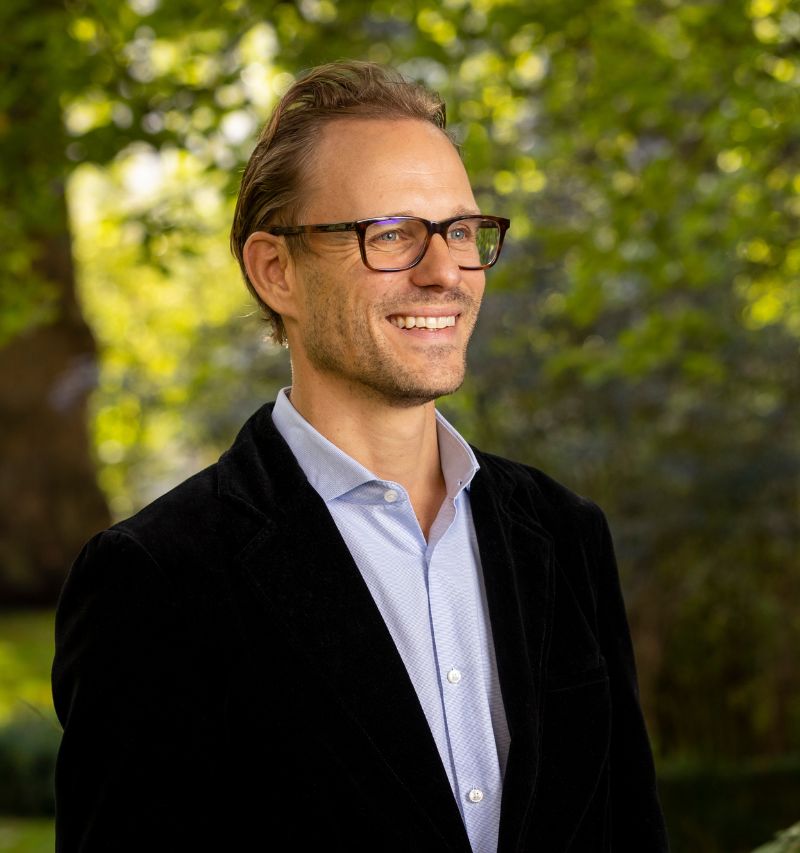
Lasting change happens when economics catches up with good intentions.
Fred – Chief Impact Investment Officer
There is an old story from the 1980s about a group of Soviet officials visiting London. One remarked that he hadn’t seen a single queue outside a bakery and asked to meet the person responsible for supplying bread to the city.
The story is probably apocryphal, but that’s beside the point. Its message is that markets, when they function well, can allocate resources to meet society’s needs.
That belief was one of the reasons I joined Tribe as CIO in 2019. Capital markets have an extraordinary ability to direct resources efficiently and, given the right incentives, towards companies whose products and services improve people’s lives while also creating value for stakeholders.
The past seven years have been anything but predictable. During Covid, many believed that profound change was possible. Remote working became normal, digital adoption accelerated, and governments, businesses and consumers all appeared willing to rethink long-held assumptions. It felt as though sustainability had moved decisively into the mainstream.
Reality, however, proved more complicated. The post-pandemic inflation shock, followed by the war in Ukraine and the resulting cost-of-living crisis, shifted attention back to immediate economic concerns. Political priorities changed, support for some climate policies weakened, and many companies moderated their ambitions. Sustainability was coming off the peak of a hype cycle.
Looking back, though, that period achieved something important. Policy support and societal pressure accelerated investment, drove innovation and created the scale needed for new technologies to become economically competitive.
One of my biggest learnings over the past seven years is that lasting change doesn’t happen through good intentions or policy alone. Those forces are essential because they create the conditions for progress. But real, enduring change happens when economics catches up. Once a technology becomes cheaper, faster or simply better than the incumbent, market forces begin to reinforce that transition without needing continued support.
We’re seeing that happen today. Solar power, battery storage and onshore wind are now the lowest-cost and quickest ways to generate new electricity in many parts of the world. At the same time, electricity demand is rising again for the first time in decades, driven by electrification and the rapid growth of AI-enabled data centres.
For investors, that’s an important shift. The investment case is becoming less dependent on political goodwill and increasingly grounded in economic reality. In the long run, that’s a much stronger foundation. Markets can then do what they do best: allocate capital towards the companies providing the most efficient solutions to society’s biggest challenges.
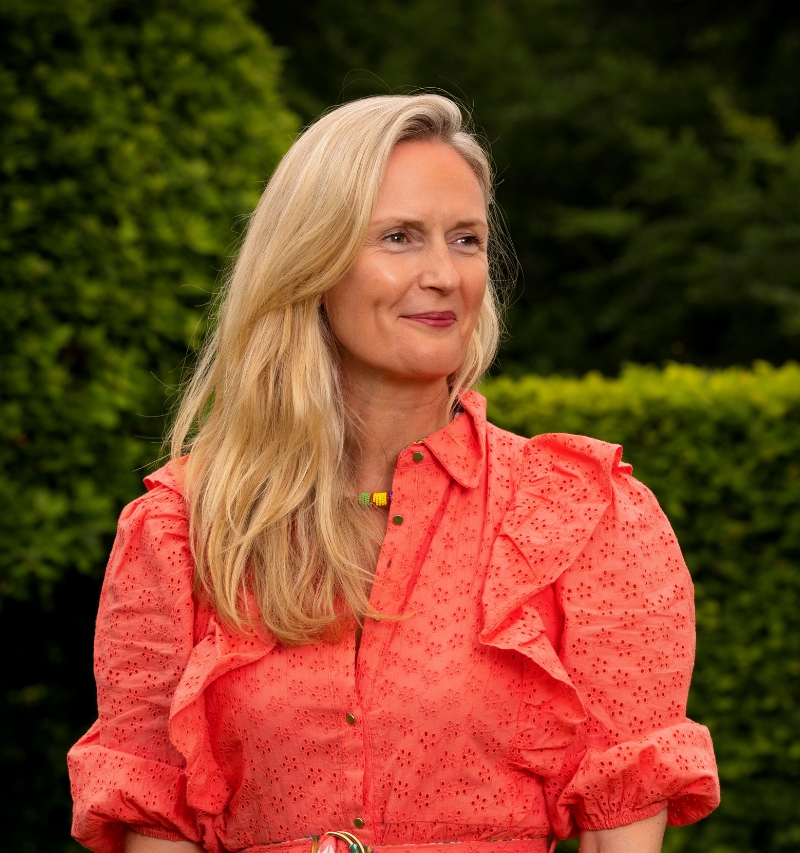
Methods change, values endure.
Amy – Co-founder, Non-Executive Director
In the thirty years I’ve worked in impact, almost everything about the practice has changed. How we define impact, how we identify it, how we measure it and how we manage for it have all evolved, often several times over.
The terminology has changed too. The impact label is younger than the work itself, and each generation has brought new thinking, tools and expectations.
What has changed far less are the values that sit behind it.
When we co-founded Tribe in 2016, we set out with a clear mission: to build a different kind of wealth manager, one that could help people use their wealth to achieve both financial and positive impact outcomes. A decade later, much about the world around us – and the way our industry approaches impact – has changed. But that fundamental ambition has not.
Shakespeare describes love as “an ever-fixed mark, that looks on tempests and is never shaken”. For a sailor, an ever-fixed mark was something to take a bearing from: a point of reference that helped you navigate changing conditions.
I think about values in much the same way.
The last decade in finance has brought more than its share of changing conditions. Impact investing has grown rapidly, faced greater scrutiny and navigated shifting economic and political priorities. Methodologies have developed, terminology has evolved and approaches that once seemed settled have been reconsidered.
Through all of that, I’ve seen the importance of having something consistent to steer by. I’ve seen it in our clients, and in the fund managers and businesses we work with: people continuing to pursue better social and environmental outcomes even when the environment around them has become more difficult. For Tribe, our values have helped us hold onto the mission we set ourselves in 2016, while allowing the way we pursue it to keep evolving.
More team learnings coming over the summer.