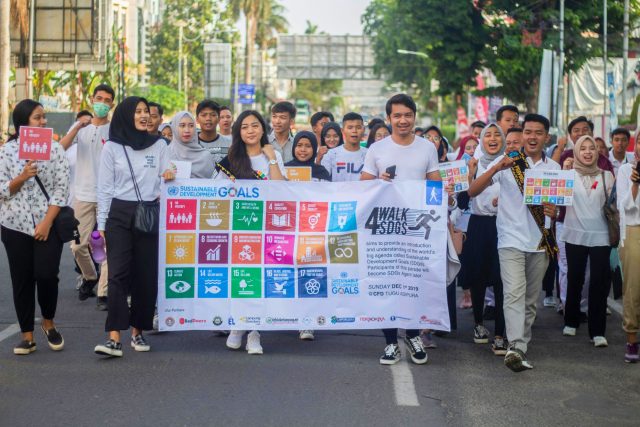

In 2015, world leaders agreed to 17 Sustainable Development Goals (SDGs), each supported by a set of measurable targets, with a collective aim to deliver them by 2030. The goals were designed to guide progress on poverty, inequality, climate, nature, education, and more — forming a global agenda for people and planet.
The sustainability movement started far before 2015, though. The concept of global goals and frameworks has roots in the 1972 Stockholm Conference, the 1987 Brundtland Report, and the 1992 Rio Earth Summit. These milestones laid the groundwork for the eight Millennium Development Goals (MDGs)1, which were introduced in 2000 with a 2015 target, and replaced by the SDGs.
As we move closer to the 2030 delivery year, it’s clear the work won’t end there. Just as sustainability didn’t start with the SDGs, it won’t stop at 2030. By nature, sustainability frameworks need to evolve because the world itself is always changing. The transition from the Millennium Development Goals to the Sustainable Development Goals is a powerful reminder of this. When the SDGs launched, we moved from reducing harm to actively building a better future.
Whatever comes next will stand on the shoulders of what we’ve learned so far, shaped by the progress and perspective the last decade has given us.
What the SDGs have delivered, and what they haven’t so far
Since their launch, the SDGs have helped drive global momentum. They’ve shaped policies, influenced investment, and created alignment across sectors and geographies.
They’ve also catalysed real progress. Some highlights include:
- Social protection now covers over 50% of the global population.2
- Extreme working poverty has dropped.3
- More girls are finishing primary and secondary education.4
- Access to electricity has increased, and internet connectivity now reaches nearly three-quarters of the world.5
- Public agricultural support reached $701 billion in 2023, bolstering food systems.6
- Maternal and child mortality rates have fallen.7
But it’s not enough; according to the United Nations (UN), only 15% of SDG targets are on track.8 Nearly half are moving too slowly, and one in five are going in reverse — set back by climate shocks, conflict, inequality, and economic volatility.9
Still, the SDGs have done something important. They’ve become a global reference point. Governments align national plans with them. Cities and local authorities use them to frame policies. Companies map strategies and sustainability targets against them. Impact investors like us use them to assess where capital is flowing and what it’s helping to build. That kind of shared language and clarity has lasting value.
The future of the SDGs: evolving the framework, sustaining the momentum
The SDGs changed how we think about sustainabilitySustainabilityMeeting today’s needs without compromising the ability of future generations to meet their needs, by working towards the attainment of the UN SDGs. read more, but the world has changed, too. Climate breakdown is accelerating. BiodiversityBiodiversityRefers to every living thing, including plants, bacteria, animals, and humans. Biodiversity is a term used to describe the enormous variety of life on Earth. read more loss, water scarcity, inequality and misinformation are all shaping the landscape in new ways.
The future global framework needs to be more dynamic and adaptive. Luckily, it’s clear that markets, regulators and society are already heading in this direction. In 2024, world leaders agreed on the Pact for the Future at the United Nations Summit of the Future. This followed early conversations through the UN80 initiative, all pointing to a desire for continued coordination and progress.
To keep the pace and build something better, we see four areas that need attention:
- Start now on the next framework. Clear direction beyond 2030 will help governments, investors, and communities plan and act with confidence. The UN Secretary-General’s Summit of the Future in September 2024 marked the first steps for this.
- Make it inclusive and flexible. The next set of goals needs to reflect the world as it is today, including new risks and emerging voices. This is particularly important given the widescale retrenchment of the United States from most UN agencies and commitments.
- Strengthen accountability. Better data, clearer legal structures and transparent reporting will help drive results.
- Close the funding gap. Achieving the goals depends on public and private finance working together. Investment must flow more equitably between regions.
Our role as impact investors sits within this final point. As an impact-focused wealth manager, we help direct capital to the solutions that are most needed. This isn’t just about hitting targets, it’s about backing the systems and ideas that can support a fairer, long-term, more sustainable future.
Why the SDGs remain central to our impact investment approach
At Tribe, the SDGs help us map outcomes, assess impact and select investments. They are the north star of our investment process. But we also go beyond them: we integrate stakeholder voice, climate risk, and systems thinking into every portfolio. And as the SDG framework evolves, so will our approach. We don’t just focus on where the capital flows, but also on what it builds, and who it serves.
The reality is that demand for sustainable investment is growing, not shrinking. In a 2025 Bloomberg Intelligence survey, 85% of ESG investors said they expected continued growth in ESG-aligned assets.10 Two-thirds expected similar growth in climate-related assets.11 And while 2024 saw a slowdown in sentiment, forecasts still see ESG assets reaching $40 trillion by 2030.12
The rise in fixed income investment, especially in green and social bonds, which is forecast to be significant in 202613, is a sign of growing appetite for a sustainable transition. This momentum isn’t driven by goodwill alone. It’s coming from consumer expectations, regulatory pressure and the recognition that sustainability and long-term financial health go hand in hand.
2030 is not the end — it’s the launchpad
The next chapter won’t be written by governments alone. Investors, communities, and individuals will help shape it. Movements like Fridays for Future, the rise of climate litigation, and the growing visibility of intersectional approaches all reflect a broader shift.
As we move closer to 2030, we’re not winding down. We’re getting ready for what’s next. The future of the SDGs is about iteration, not replacement. It’s about learning, adapting, and going further.
At Tribe, we’ll continue to align our investment process with global goals. But we’ll also keep asking what comes next. What new risks are emerging? Where can capital have the greatest impact? And how do we stay focused on regeneration, equity and resilience?
The SDGs helped accelerate global progress, but they were never the destination. They gave us a shared path, and now, we need to extend it.