
Defence plays a role within the larger concept of security, but it’s only one component. Treating defence and security as interchangeable concepts obscures where sustainable capital can play a role and make a difference.
Without security, economies fragment, institutions weaken, and inequality deepens. Security extends far beyond military hardware or weapons systems. It includes the rule of law, functioning institutions, cyber resilience, food and energy stability, and protection from climate and biological risks.
Defence vs security: making the distinction
Defence focuses on military capability and the projection of force. In many cases, it raises unavoidable tensions with human rights, civilian protection and international norms, particularly where exports flow to high-risk regimes or support offensive operations. These realities make defence difficult to reconcile within impact investing, which requires clear, positive and measurable outcomes benefitting people and planet.
Security, by contrast, places prevention and resilience at the centre. It encompasses national, human, cyber, food, energy and institutional security. It aligns closely with the UN Sustainable Development Goals (UN SDGsUN Sustainable Development Goals (UN SDGs)The Sustainable Development Goals (SDGs), also known as the Global Goals, were adopted by the United Nations in 2015 as a universal call to action to end poverty, protect the planet, and ensure that by 2030 all people enjoy peace and prosperity. There are 17 goals. read more), particularly SDG 16: Peace, Justice and Strong Institutions. It increasingly recognises environmental degradation and pandemics as core security threats, not externalities.
This difference matters for investors. A company with a strong environmental, social and governance (ESG)Environmental, Social and Governance (ESG)Environmental, Social and Governance (ESG) investing looks at the operations of a company and the potential environmental, social and governance risks associated with the way they operate. read more score that manufactures weapons may struggle to deliver a credible impact. Meanwhile, investments that strengthen institutions, protect civilians or reduce conflict risk often sit more naturally within impact frameworks.
A security lens on investment opportunities
At Tribe, we focus on opportunities that reduce the ethical tension often associated with defence while directing capital towards solutions that support prosperity, resilience and stability. Rather than expanding military capability, our approach centres on strengthening the systems that keep societies functioning safely.
Dual-use and peace-focused innovation
Technologies such as cybersecurity, secure communications and digital infrastructure protection serve both civilian and defence needs while safeguarding essential services.
Investments in digital security help protect hospitals, financial systems, and public infrastructure from disruptions. Related areas include supply chain traceability technologies, which improve transparency and resilience across global production networks, and emerging innovations in AI, space technology and biotechnology that support civilian applications ranging from disaster response to medical resilience.
These priorities are increasingly reflected in initiatives such as the NATO Innovation Fund, which focuses on technologies with both societal and security benefits.
Institutional strength and rule of law
Effective institutions reduce the likelihood of conflict by improving governance, transparency and accountability.
For example, capital allocated to multilateral development banks (MDBs) supports the development of legal frameworks, judicial systems, and public institutions that enable stable economic growth and peaceful dispute resolution.
At the same time, technologies that strengthen governance systems, transparency and anti-corruption processes contribute to more resilient societies and more predictable investment environments.
Resilience and risk reduction
Investments in resilient infrastructure, such as reinforced power networks, strengthened cabling and flood-resistant infrastructure, help communities withstand increasingly extreme weather events.
Decarbonising energy systems and expanding distributed renewable power can also strengthen national resilience by reducing dependence on concentrated or imported energy sources while decentralising energy networks.
We also see security benefits in sectors that manage environmental and industrial risks responsibly.
As an example, advanced waste management and hazardous materials treatment play a critical role in safely handling toxic substances, including the responsible disposal of legacy chemical weapons and industrial chemicals. These activities reduce environmental harm while contributing to public safety.
Across each of these areas, the underlying principle is consistent: security can be strengthened by protecting civilians, reinforcing institutions and improving system resilience. By directing capital towards these solutions, investors can contribute to stability and long-term prosperity while avoiding direct exposure to weapons manufacturing or military hardware such as bombs, weapons systems, knives or military aircraft.
Amy and Fred had a recent conversation about the nuances of defence companies from an impact perspective. Click here to revisit this video.
Investing in resilience, not weapons
Our exposure to defence is very limited and only indirectly held. In some cases, the companies we invest in provide services used across many industries, including defence. Examples include:
- Waste management firms that safely dispose of hazardous materials
- Engineering and design software used across infrastructure and industrial sectors
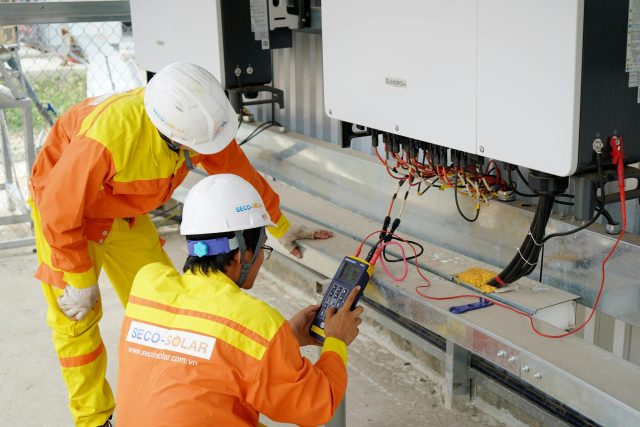
- Testing, electronics and power management technologies
These companies do not primarily produce military equipment. Their work is typically focused on civilian systems and multi-use technologies, with defence representing only a small part of their activities. Our approach is deliberate: limited exposure to defence, and a broader focus on security. This is because by investing in systems that protect people, infrastructure and institutions, we believe investors can support a safer and more resilient world.
Our investment boundaries
While we support investments that strengthen societal resilience and security, we don’t invest directly in weapons manufacturing or military hardware.
We would invest in:
- Cybersecurity and digital infrastructure protection
- Resilient infrastructure and climate adaptation
- Supply chain transparency and traceability
- Decarbonisation and distributed energy systems
- Institutional strengthening through MDBs
- Responsible hazardous waste and materials management
We would not invest in:
- Weapons manufacturing
- Bombs or munitions
- Military aircraft
- Small arms or weaponised equipment
For more information on how we manage exposure to controversial activities, contact us for our exposures document.